

02 Apr Hydrotherapy for Cerebral Palsy: An NDIS Guide to Aquatic Exercise Physiology
What if the secret to moving with ease isn’t found on a gym floor, but within the weightless embrace of a 34-degree heated pool? We know that for many Australians living with cerebral palsy, traditional land-based exercise can feel like an uphill battle against gravity and constant muscle spasticity. It’s frustrating when your body feels heavy and every step involves a high level of pain or effort. Finding the right hydrotherapy for cerebral palsy NDIS provider shouldn’t add to that stress, yet dealing with the bureaucratic maze of plan categories often feels just as rigid as a tight muscle.
We agree that you deserve a therapy plan that works with your body, not against it. Clinical studies show that warm water immersion can reduce spasticity by approximately 35% during a single session, providing a unique window for movement that isn’t possible on land. This guide will show you exactly how to transform your management plan and successfully access specialized aquatic programs through your NDIS funding. We’ll walk you through the specific line items you need and show you how our Exercise Physiologists create a tailored journey to help you move better and feel better.
Key Takeaways
- Discover how the science of buoyancy and hydrostatic pressure in heated water (32-34°C) provides a supportive environment to improve movement and manage CP symptoms.
- Learn why a “mixed-modality” approach, balancing aquatic therapy with land-based exercise, is the gold standard for achieving your long-term physical goals.
- Navigate your funding options by identifying which budget categories cover hydrotherapy for cerebral palsy NDIS and how to meet the “Reasonable and Necessary” criteria.
- Take the first step on your journey with a clear guide to the initial consultation process at our dedicated Templestowe Lower facility.
Understanding Hydrotherapy for Cerebral Palsy: A Buoyant Solution
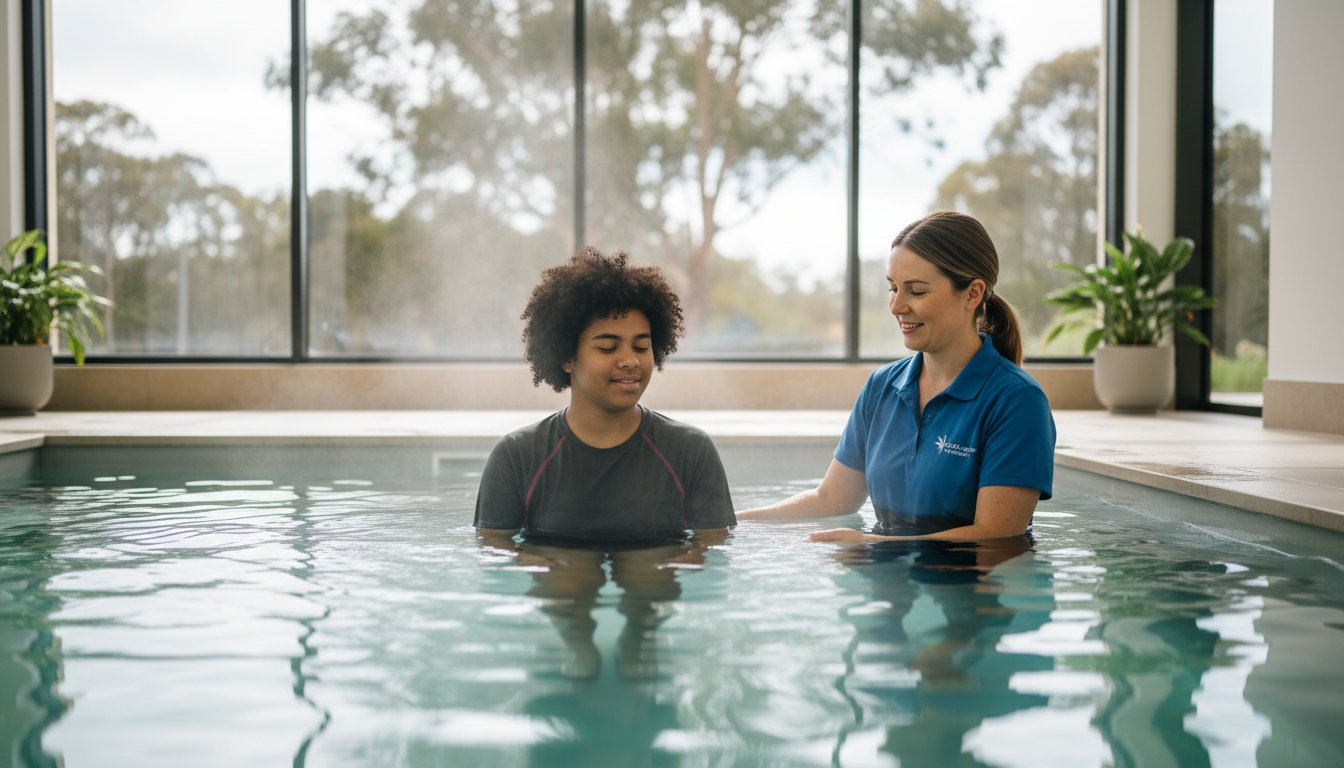
Living with Cerebral Palsy (CP) involves managing daily physical challenges, but the right environment makes all the difference. Hydrotherapy for cerebral palsy NDIS participants is a clinical intervention that takes place in a specialized, heated pool maintained at 32 to 34 degrees Celsius. This isn’t just a swimming lesson. It’s a structured therapy session designed to use the physical properties of water to improve functional mobility. While a standard public pool is often too cold for those with neurological conditions, these warmer temperatures are essential for muscle relaxation and safety.
The “gravity-free” nature of water is a genuine game-changer for people with limited mobility. When you’re submerged to the chest, the water supports 90% of your body weight. This buoyancy allows individuals who use wheelchairs or walking frames on land to stand, step, and jump with ease. It removes the constant fear of falling, which often limits progress during traditional land-based physiotherapy. By reducing the impact on joints, we can focus on strengthening muscles that are otherwise difficult to activate. This makes the pool a safe and supportive space to push boundaries and achieve new milestones.
The Role of the Accredited Exercise Physiologist
It’s important to distinguish between a standard swim coach and an Accredited Exercise Physiologist (AEP). A swim coach teaches you how to move through the water, but an AEP uses the water to help you move better through life. Our AEPs are university-qualified health professionals who specialize in clinical exercise prescription. We start with a comprehensive clinical assessment to understand your Gross Motor Function Classification System (GMFCS) level and specific NDIS goals. This ensures your program is evidence-based and tailored to your unique needs, rather than a one-size-fits-all approach. We are here to guide you through every step of this journey.
Why Warm Water Matters for CP
The heat of a 33-degree pool provides more than just comfort; it’s a physiological tool. Warmth acts directly on muscle spindles to reduce spasticity and high muscle tone. This relaxation allows for a greater range of motion that isn’t easily achieved in cooler environments. Research indicates that warm water immersion can increase peripheral blood flow by up to 30%, which improves circulation to limbs that might feel cold or stiff. Beyond the physical, the hydrostatic pressure of the water provides a calming effect for sensory regulation. This helps many of our clients feel safe and grounded, creating a supportive space for both physical and mental growth.
- Clinical Focus: Targeted movements to improve gait and posture.
- Safety First: Reduced risk of injury compared to land-based training.
- Empowerment: Increased independence through improved motor control.
The Therapeutic Science: How Water Manages CP Symptoms
Water provides a unique environment where the laws of gravity change. For individuals using hydrotherapy for cerebral palsy NDIS funding, the pool becomes a laboratory for movement. It allows our team to address physical challenges that are often too painful or difficult to manage on dry land. By utilizing the specific properties of water, we can help you or your child achieve milestones that might feel out of reach in a traditional gym setting.
Buoyancy and Movement Freedom
When you’re submerged to the chest, buoyancy supports approximately 75 percent of your body weight. If you go deeper, to the neck, that support increases to 90 percent. This massive reduction in joint loading means a person with CP can practice gait training or standing balance without the fear of falling. This physical safety often leads to a measurable increase in movement confidence during the first few sessions. It’s about finding a level of freedom that land-based therapy simply can’t replicate.
Hydrostatic Pressure and Proprioception
Water exerts equal pressure on every submerged part of the body, a force known as hydrostatic pressure. This constant tactile input acts like a supportive liquid brace. It sends continuous signals to the brain about where the limbs are in space, which significantly improves proprioception. For those living with CP, this pressure assists in reducing edema and stabilizing the trunk. Research indicates this environment helps maintain postural alignment, allowing for 20 to 30 percent more efficient muscle engagement during targeted exercises.
Managing Spasticity and Tone
Warm water, typically maintained between 32 and 34 degrees Celsius in Australian therapeutic facilities, is essential for neurological relaxation. The heat reduces the sensitivity of muscle spindles, which helps lower high muscle tone and ease painful spasms. Our Accredited Exercise Physiologists use water turbulence and specific flow patterns to either challenge balance or provide resistance for safe strength building. Spasticity management in an aquatic context refers to the strategic use of thermal and physical water properties to reduce involuntary muscle stiffness while increasing functional range of motion.
The resistance of water also provides a built-in safety net for strengthening. Unlike weights, water resistance is proportional; the harder you push, the more it pushes back, but it stops the moment you do. If you want to see how these principles apply to your specific goals, you can start your journey with our team to develop a tailored aquatic program. This evidence-based approach ensures every minute in the pool contributes to better mobility and long-term independence.

Hydrotherapy vs. Land-Based Exercise: Finding the Balance
Choosing between the pool and the clinic isn’t about picking one over the other. It’s about how they work together to help you thrive. While land-based exercise is vital for building bone density and functional skills like walking, the physical properties of water offer a unique environment for growth. When you’re submerged to chest height, buoyancy supports about 75% of your body weight. This reduction in gravity allows for a range of motion that’s often impossible on land, making hydrotherapy for cerebral palsy NDIS programs a powerful tool for those with limited mobility.
Safety is another major factor. For many NDIS participants, the fear of falling can limit their effort during land-based sessions. Water provides a 360-degree support system. If you lose your balance, you won’t hit a hard floor; you’ll simply float. This safety net allows our team to push the boundaries of your balance and coordination in a way that feels secure. Additionally, the viscosity of water provides constant resistance. Moving your limbs through water requires significantly more effort than moving through air. This boosts cardiovascular health and muscle endurance without the jarring impact on your joints, helping you move better and feel better.
When to Prioritise the Pool
We often recommend prioritising aquatic sessions for individuals at GMFCS levels IV and V, where weight-bearing on land is significantly restricted. The pool also serves as a critical bridge for post-surgical rehabilitation. After procedures like a selective dorsal rhizotomy (SDR) or orthopedic surgery, the warm water helps manage post-operative stiffness. It allows you to begin strengthening exercises weeks earlier than you might on land, which can accelerate your recovery journey by up to 25% in the early stages.
The MoveMed Integrated Approach
Our philosophy focuses on a seamless transition between the water and the clinic. We use detailed land-based assessments to identify your specific movement gaps. These insights then shape your aquatic program, ensuring every minute in the pool targets a real-world goal. This is a core part of our Exercise Physiology service, where we blend science with a supportive environment.
As you meet your functional milestones, we slowly transition your program from the pool back to the clinic. This ensures you can apply your newfound strength to everyday tasks, like standing up from a chair or navigating your home safely. We’re here to guide you through every step of this partnership, building a more resilient body for the long term. This mixed-modality approach is often the gold standard for NDIS participants because it addresses both physiological needs and practical, daily life goals.
Navigating NDIS Funding for Hydrotherapy and Exercise Physiology
Securing hydrotherapy for cerebral palsy NDIS support involves understanding how the NDIA views aquatic exercise. It isn’t just about “going for a swim”; it’s a clinical intervention designed to build functional capacity. To get this included in your plan, the support must meet the “Reasonable and Necessary” criteria. This means the therapy should be related to your disability, represent value for money, and be likely to help you achieve your long-term goals. We work beside you to provide the clinical evidence required to prove these benefits.
NDIS Budget Categories Explained
Most participants access hydrotherapy through the Capacity Building – Improved Daily Living budget. This is the primary source for Allied Health services. Because our sessions are led by an Accredited Exercise Physiologist (AEP), they fall under the same line items as standard clinic sessions. In some cases, the Health and Wellbeing category might also apply if the focus is specifically on maintaining physical fitness to prevent secondary health complications. Using an AEP is vital; the NDIS requires a university-qualified professional to oversee these sessions to ensure they’re safe and effective for complex conditions like Cerebral Palsy.
Goal Setting for Your NDIS Plan
Your NDIS plan is built on goals, and your therapy must align with them. We don’t just focus on the water; we focus on the life you want to lead. If your goal is “to increase my independence at home,” we document how aquatic therapy improves your core strength for safer transfers. Common goals we support include:
- Improving walking distance by 20% over a six-month period.
- Reducing daily pain levels from a 7/10 to a 4/10 to improve sleep quality.
- Increasing upper body range of motion to assist with self-care tasks.
MoveMed provides detailed progress reports for your plan reviews, showing exactly how you’re tracking. For a deeper look at how these services work in your local area, check out our NDIS Exercise Physiology Victoria Guide.
Addressing the Cost Objection
A common question involves the difference between therapy fees and pool entry. Generally, the NDIS covers the A$166.99 to A$193.99 hourly rate for the Exercise Physiologist’s professional time. However, the participant is usually responsible for the pool entry fee, which typically ranges from A$5.00 to A$10.00. Think of this as an investment in your future. By improving mobility now, you often reduce the need for more expensive 1:1 care or surgical interventions later. When speaking with your NDIS coordinator, use this checklist:
- Ask if “Exercise Physiology” is specifically listed in your budget.
- Confirm if travel costs for the therapist are included in your funding.
- Request a quote from us to present at your next planning meeting.
Ready to start your journey toward better movement? Book an NDIS assessment with MoveMed today and let’s build your plan together.
Starting Your Hydrotherapy Journey with MoveMed in Templestowe
Taking the first step toward a new therapy can feel like a big decision. At MoveMed, we don’t just see you as a patient; we see you as a partner. Our Templestowe Lower facility is designed to be a welcoming hub where clinical expertise meets a supportive community atmosphere. We’ve built our hydrotherapy for cerebral palsy NDIS services around the idea that every person deserves a tailored path to mobility. Our pool environment prioritizes safety and accessibility, ensuring every participant, regardless of their current mobility level, can enter the water with confidence and dignity.
We believe your health is a long term journey. This is why our team focuses on building a relationship based on trust and clear communication. From the moment you walk through our doors near Williamsons Rd, you’ll find a space that feels less like a clinic and more like a supportive team environment dedicated to your growth. To ensure the highest safety standards, our facility includes:
- Electronic ceiling hoists for secure and comfortable transfers
- Gradual ramp access for water-specific wheelchairs
- Specialized aquatic mobility aids and flotation supports
- Constant water temperature control maintained at 34 degrees Celsius
What to Expect in Your First Session
Your journey begins with a comprehensive 60 minute land-based assessment. This session is crucial because we need to understand your unique biomechanics before you ever touch the water. Our physiotherapists evaluate your range of motion, muscle tone, and functional goals to create a “bulletproof” aquatic management plan. This plan acts as a roadmap for your recovery and strength building. Once we’re in the pool, we don’t just set a routine and leave it. We monitor your heart rate, fatigue levels, and movement quality during every session. As you get stronger, we adjust the intensity and resistance levels to ensure you continue to thrive and reach your NDIS milestones.
Our Templestowe Community
MoveMed is proud to be a part of the local Manningham area. You’ll find us conveniently located just off Williamsons Rd, making it easy for NDIS participants from Templestowe, Doncaster, and Lower Plenty to access high quality care. Our philosophy is simple: move better, feel better, perform better. We’re here to help you bridge the gap between clinical therapy and everyday life. Whether your goal is to walk more independently or manage chronic muscle stiffness, our team is ready to guide you through the most effective hydrotherapy for cerebral palsy NDIS programs in Melbourne’s east.
Ready to start your journey? Contact our intake team today to discuss your NDIS plan and book your initial assessment. We’re here to help you build a stronger, more resilient future.
Empower Your Movement Through Personalised Aquatic Care
Your journey toward improved mobility and reduced muscle tension starts with a single step into the water. By leveraging the natural buoyancy of the pool, which reduces weight-bearing stress by up to 90%, you can practice functional movements that often feel impossible on land. Our Accredited Exercise Physiologists at MoveMed use evidence-based neurological protocols to help manage CP symptoms like spasticity and restricted range of motion. We know that navigating the NDIS can feel complex; that’s why our team acts as a compassionate guide to help you access the specific support you deserve.
Choosing hydrotherapy for cerebral palsy NDIS funded services at our Templestowe facility means you’re entering a partnership focused on long-term health. We don’t just provide exercises; we build a structured path for you to thrive. Our evidence-based approach ensures every session is customised to your specific physical requirements. It’s time to move past the limitations of land-based therapy and experience the freedom that water provides. We’re ready to help you build a stronger, more resilient body in a safe and welcoming environment.
Book Your NDIS Hydrotherapy Consultation at MoveMed Templestowe
We look forward to supporting you as you achieve your goals and discover what’s truly possible for your movement and well-being.
Frequently Asked Questions
Can I use NDIS funding for hydrotherapy pool entry fees?
You can use your NDIS funding to cover the professional fees of the therapist guiding your session, but you usually pay the pool entry fee yourself. The NDIA identifies entry fees as a standard “cost of living” expense that any person would pay to use a public facility. If your therapist must enter the water to provide support, their specific entry fee is often included in the hourly rate billed to your Capacity Building budget.
Is hydrotherapy safe for people with severe spastic cerebral palsy?
Hydrotherapy is very safe and highly effective for severe spasticity when supervised by a trained professional. The warm water, typically kept between 33 and 35 degrees Celsius, naturally reduces muscle tone and eases painful stiffness. Our team at MoveMed conducts a 100% individualised safety assessment before your first session to ensure every movement supports your journey toward better mobility in a secure environment.
Do I need a referral from a GP for NDIS hydrotherapy?
You don’t need a GP referral to start hydrotherapy for cerebral palsy NDIS sessions at MoveMed if you’re self-managed or plan-managed. While it isn’t a legal requirement, having a medical summary helps our team understand your full clinical history. We focus on a partnership approach, so we’ll gladly work with your existing doctors to ensure your aquatic program is perfectly tailored to your health goals.
How often should someone with CP attend hydrotherapy sessions?
Most participants achieve the best physical outcomes with 1 to 2 sessions per week. A 2022 clinical study on aquatic therapy demonstrated that consistent weekly sessions improved gross motor function in 85% of participants with cerebral palsy. We’ll help you find a rhythm that fits your lifestyle and NDIS budget while ensuring you move better and feel better through regular, low-impact exercise.
What is the difference between aquatic physiotherapy and hydrotherapy?
Aquatic physiotherapy is a clinical treatment delivered by a registered Physiotherapist, while hydrotherapy is a broader term for general water-based exercise. At MoveMed, we provide evidence-based aquatic physiotherapy, which means your sessions are designed using specific knowledge of biomechanics. This professional approach ensures you aren’t just splashing around, but are actively building a bulletproof body through targeted movements that translate to better function on land.
What should I bring to my first NDIS hydrotherapy session at MoveMed?
Please bring your swimwear, a towel, a water bottle, and any personal mobility aids you require for the change rooms. It’s also useful to bring a copy of your current NDIS goals so we can align your program with your funding requirements from day one. We provide a welcoming and supportive space, so we’ll guide you through the facility and help you feel comfortable before you even touch the water.
Can hydrotherapy help with CP-related pain management?
Hydrotherapy is an excellent tool for managing chronic pain because buoyancy supports up to 90% of your body weight. This weightlessness takes the pressure off your joints and spine, allowing you to move with much less discomfort than on land. By performing gentle exercises in the warm water, we can help you break the cycle of pain and stiffness, empowering you to thrive in your daily life.
How do I get hydrotherapy included in my NDIS plan review?
To include hydrotherapy in your next plan, you need a professional report from a registered therapist. MoveMed provides detailed progress reports that link your hydrotherapy for cerebral palsy NDIS sessions directly to your primary goals, like increased independence or community participation. Presenting this evidence during your plan review helps the NDIA see that the service is reasonable and necessary for your ongoing development.

No Comments